
The fundamental problem faced by markets today is a chronic lack of growth caused by deleveraging after the financial crisis....
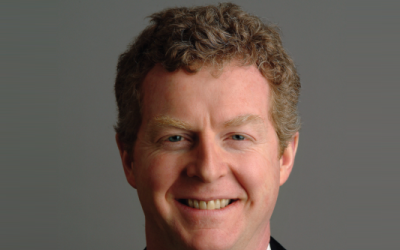
Johanna Kyrklund, Head of Multi-Asset Investments
Sign up for our weekly Newsletter and receive the latest ETF and ETC news.
Click here to register for your free copy
For professional investors and advisers only.This document is not suitable for retail clients.
This lack of growth makes us reliant on government stimulus at the same time as it exposes the unsustainability of government debt levels.
The eurozone provides an extreme example of this, where the severity of the problem is compounded by the need to co-ordinate policy among seventeen member states. In this context, the announcement of bank recapitalisation, a leveraged EFSF and a 50% haircut on Greek debt by the European authorities should be encouraging. Have they finally heeded the warning from the
markets?
Certainly these measures, on the face of it, could help to calm markets as we go into the year end. The good news is that the European authorities in general, and the German government in particular, have understood the need for action. With the prospect of further announcements over the next few days and weeks it will be hard for market participants to ‘short’ European political risk.
However, the devil will be in the detail: in order to leverage the EFSF at a reasonable cost France must retain its AAA rating; there is still a lack of clarity as to what the role of the ECB will be; and will a 50% haircut be enough to save Greece from bankruptcy? Finally, longer term issues remain relating to how the competitiveness of the peripheral economies can be restored in the
absence of currency devaluation.
Overall, we have increased our exposure to equities and credit over October in the expectation of improved market performance into year end. In the short term, US economic data have improved and for the time being the European authorities have kicked the can a little further down the road.
However, we remain vigilant. Remember, debt has not been retired – only shifted – and at some point the options are to pay it back or to default. Both are painful events that will limit growth for an extended period. Moreover, the absence of a sound banking system which can extend credit will further depress potential growth. Against this backdrop we continue to focus on the trends we trust. Within equities, our emphasis is on higher quality exposures and, across other asset classes, we aim to focus on enhancing yield in a low interest rate environment.
Disclaimer:
The views and opinions contained herein are those of Azad Zangana, European economist, and may not necessarily represent views expressed or reflected in other Schroders communications, strategies or funds.
For professional investors and advisers only.This document is not suitable for retail clients.
This document is intended to be for information purposes only and it is not intended as promotional material in any respect. The material is not intended as an offer or solicitation for the purchase or sale of any financial instrument. The material is not intended to provide, and should not be relied on for, accounting, legal or tax advice, or investment recommendations. Information herein is believed to be reliable but Schroder Investment Management Ltd (Schroders) does not warrant its completeness or accuracy. No responsibility can be accepted for errors of fact or opinion. This does not exclude or restrict any duty or liability that Schroders has to its customers under the Financial Services and Markets Act 2000 (as amended from time to time) or any other regulatory system. Schroders has expressed its own views and opinions in this document and these may change. Reliance should not be placed on the views and information in the document when taking individual investment and/or strategic decisions. Issued by Schroder Investment Management Limited, 31 Gresham Street, London EC2V 7QA, which is authorised and regulated by the Financial Services Authority. For your security, communications may be taped or monitored.
Source: ETFWorld – Schroders
Subscribe to Our Newsletter