
On Wednesday 22 July 2026, J.P. Morgan Asset Management listed a new share class of the Japan Research Enhanced Index Equity Active UCITS ETF on the London Stock Exchange, forming part of the Irish platform JPMorgan ETFs (Ireland) ICAV.
Article created by the editorial staff of ETFWorld.co.uk
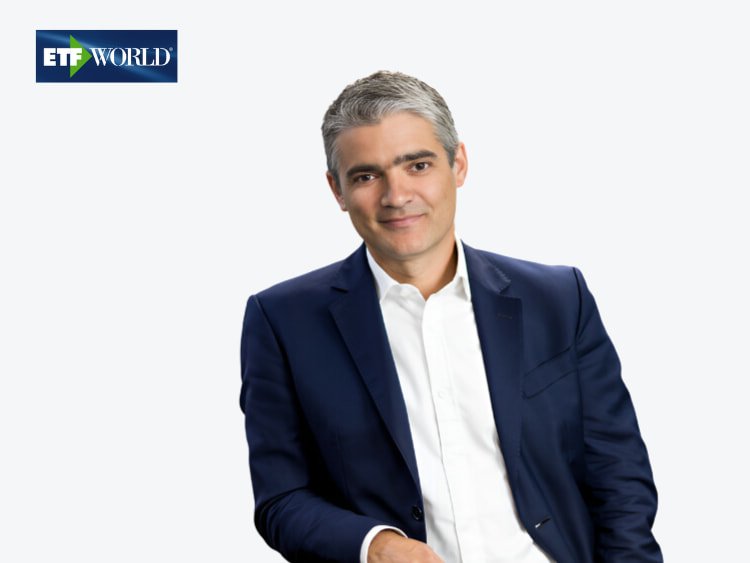
Travis Spence, Global Head of ETFs at J.P. Morgan Asset Management
The Japan Research Enhanced Index Equity Active UCITS ETF is expanding its London-listed range with a class hedged against yen risk. TER at 0.25 per cent, benchmark: MSCI Japan.
The class has ISIN code IE000UN8JEG0 and a total expense ratio (TER) of 0.25% per annum. According to the product fact sheet published by the management company, the ISIN identifies the USD Hedged accumulation class: the reference currency is the US dollar and exposure to the yen is neutralised. The listing extends to the UK market a currency hedging option previously available in euros and Swiss francs.
What the investment policy entails
The sub-fund pursues an actively managed strategy and aims to achieve a long-term return that outperforms the MSCI Japan Index (Total Return Net). It invests at least 67 per cent of its assets — excluding assets held for ancillary liquidity purposes — in equities of companies domiciled in Japan or which conduct the principal part of their economic activity in Japan. Small-cap companies are included in the scope.
The approach follows that of J.P. Morgan’s Research Enhanced Index (REI) range: portfolios constructed to closely track the benchmark, with deviations focused on the selection of individual stocks rather than on sector or style bets. As at June 2026, the REI range comprised 16 sub-funds with total assets of approximately US$37.1 billion.
The fund is managed by JPMorgan Asset Management (Japan) Limited, with JPMorgan Asset Management (UK) Limited acting as sub-delegate. The strategy employs full physical replication and the sub-fund does not engage in securities lending.
Currency hedging and the yen outlook
The listed share class hedges yen/dollar exposure. Investors therefore receive the return on the Japanese portfolio net of movements in the Japanese currency against the dollar, net of the cost of hedging, which depends on the short-term interest rate differential between the two regions. For investors thinking in euros, however, the euro/dollar exchange rate risk remains unhedged.
The currency issue is central at this stage. On 22 July 2026, the USD/JPY exchange rate stood at 163.19, up 0.42% on the previous trading session; over the past month, the yen has lost 1.00% and, over the past twelve months, 11.19%. In early July, the Japanese currency weakened to around 162 against the dollar for the first time in around forty years.
On the monetary policy front, on 16 June 2026, the Bank of Japan raised its key interest rate by 25 basis points to 1 per cent – the highest level since 1995 – by a vote of 7 to 1, with board member Toichiro Asada voting against; the previous rise had been in December, when the rate was raised to 0.75 per cent. On 25 June, board member Naoki Tamura indicated that the baseline scenario involved increases of 0.25 percentage points every few months towards a neutral rate of around 2 per cent.
The strategy’s portfolio
The share classes share the same underlying portfolio. Data available for the USD accumulation class (ISIN IE00BP2NF958, ticker JREJ), as at 31 March 2026, show 118 securities in the portfolio, with the top ten holdings accounting for 30.68% of the total and exposure to Japan standing at 98.54%.
The top ten holdings were Mitsubishi UFJ Financial Group (4.65%), Toyota Motor (4.56%), Sony Group (3.18%), Hitachi (3.08%), Sumitomo Mitsui Financial Group (2.98%), Tokyo Electron (2.97%), Mitsui & Co. (2.68%), Tokio Marine Holdings (2.26%), ITOCHU (2.16%) and Advantest (2.16%).
In terms of sectors, industrials accounted for 26.30 per cent, financials for 17.65 per cent, consumer discretionary for 16.96 per cent and technology for 12.68 per cent.
Strategy and benchmark performance
The strategy has been in operation since 29 March 2022, the launch date of the USD (acc) class, which had assets under management of €402 million as at July 2026.
Returns for the USD (acc) class, expressed in euros and inclusive of dividends: +15.69% year-to-date, +28.80% over one year, +52.95% over three years and +55.86% since launch; on a year-by-year basis, +8.67% in 2025, +15.44% in 2024 and +16.40% in 2023. In terms of risk, one-year volatility stands at 19.27% and three-year volatility at 21.94%, with a maximum drawdown of 19.91% since launch.
The benchmark, denominated in US dollars and on a net return basis, recorded a 12-month return of +31.74% and a year-to-date return of +16.15% as at 29 May 2026, with a three-year annualised return of 20.21%. Over previous financial years, the index recorded a return of +24.60% in 2025, +8.31% in 2024, +20.32% in 2023 and -16.65% in 2022. The two figures are not directly comparable, as they are expressed in different currencies.
As for the fundamentals, as at 29 May 2026, the MSCI Japan had a dividend yield of 1.83%, a price-to-earnings ratio of 20.87, a forward P/E of 17.50 and a price-to-book ratio of 1.97.
The ESG profile and SFDR classification
The sub-fund systematically integrates ESG analysis into investment decisions for at least 90% of the securities purchased. At least 51% of net assets are invested in companies with positive environmental and/or social characteristics that adhere to good governance practices, as measured using the manager’s proprietary ESG scoring methodology and/or data from third-party providers. At least 20% of net assets is allocated to Sustainable Investments as defined by the SFDR, contributing to environmental or social objectives.
The wording used in the documentation — the sub-fund “promotes environmental and/or social characteristics” — corresponds to the definition of products falling under Article 8 of the SFDR. The sub-fund’s name has since dropped the ‘(ESG)’ reference present in previous versions, replacing it with the term ‘Active’, without this altering the investment policy described above.
The market context
Japanese equities have reached this level following a prolonged bull run and a recent period of volatility. On 6 July 2026, the TOPIX closed at 4,101.96 points, a new all-time closing high, whilst the Nikkei 225 finished at 69,737.69 points after briefly surpassing the 70,000 mark during the day without consolidating that level.
In the weeks that followed, the picture changed. On 21 July, the Nikkei 225 closed at 66,232.19 points, up 3.26 per cent, within a 52-week range of 39,586.53 to 72,831.73 points. On 22 July, the index closed at 66,115.60 points, down 0.18 per cent. The correction was driven by profit-taking on shares linked to semiconductors and artificial intelligence.
The active ETF market in Europe
The listing forms part of a growing segment. Assets under management in active ETFs domiciled in Europe rose from €52.5 billion at the end of 2024 to €78.4 billion at the end of 2025, before climbing to €85.6 billion at the end of the first quarter of 2026.
According to Morningstar data as at the end of 2025, J.P. Morgan Asset Management held around 47 per cent of assets under management in European active ETFs, ahead of Fidelity (10.4 per cent) and Pimco (6.7 per cent). The main contributor to this position is the Research Enhanced Index range.
Conclusions
With the listing on 22 July, J.P. Morgan’s Japanese Research Enhanced Index range adds a class in London with currency hedging against the US dollar, alongside the dollar- and sterling-denominated classes already traded on the UK market. The fee remains in line with the rest of the range, at 0.25% per annum.
The key deciding factor for investors is the choice of currency. With the yen at multi-decade lows against the dollar and the Bank of Japan on a path towards interest rate normalisation, the decision between a hedged and an unhedged share class affects returns just as much as the selection of securities. Hedging eliminates the yen/dollar exchange rate effect but entails a cost linked to the interest rate differential, and for those investing in euros, it leaves exposure to the dollar unchanged.
| Product Name | JPM Japan Research Enhanced Index Equity Active UCITS ETF |
| ISIN | IE000UN8JEG0 |
| SEDOL | BV5QFK4 |
| Issuer | JPMorgan |
| Currency | USD |
| Management Fee | 0.25% |
Source: ETFWorld.co.uk
Subscribe to Our Newsletter