
HSBC Asset Management has expanded the London range of its passive Sukuk fund, which tracks the FTSE IdealRatings Sukuk Index and invests solely in Shariah-compliant, investment-grade US dollar Sukuk.
Article created by the editorial staff of ETFWorld.co.uk
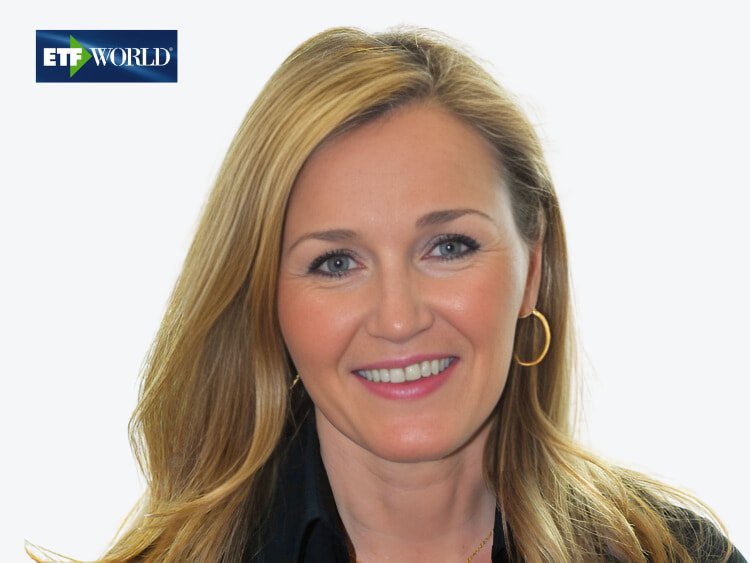
Olga de Tapia, Global Head of ETF & Indexing Sales at HSBC Asset Management
HSBC Asset Management has listed a new share class of the HSBC Global Funds ICAV – Global Sukuk UCITS ETF on the London Stock Exchange, with trading beginning on 21 September 2026 (ISIN IE000JUK4YF1). The Irish-domiciled, passively managed fund tracks the FTSE IdealRatings Sukuk Index (total return) and offers exposure to a diversified portfolio of Shariah-compliant, investment-grade Sukuk issued in global markets. The Sukuk ETF already trades in London through US dollar share classes; the new line provides an additional access point to the same portfolio.
What the HSBC Global Sukuk UCITS ETF aims to do
According to the fund documentation, the ETF seeks to provide regular income and capital growth by tracking the performance of the FTSE IdealRatings Sukuk Index (total return) as closely as possible, while maintaining adherence to Shariah principles.
Sukuk are Islamic fixed income securities. They are structured to comply with Shariah law, which prohibits conventional interest payments. Instead, investor returns are linked to underlying assets, leases or business activities. In portfolio terms, Sukuk are generally treated as part of the fixed income allocation.
Index and investment policy
The FTSE IdealRatings Sukuk Index is composed of global Islamic fixed income securities. The fund invests in, or gains exposure to, US dollar-denominated, investment-grade Sukuk that are Shariah-compliant and issued in global markets. All of these securities are index constituents.
The main features of the investment policy, as set out by HSBC, are:
Index currency: US dollar. Index returns are unhedged.
Management style: passive.
Replication technique: optimisation. The portfolio is constructed to minimise the return difference between the fund and the index, taking into account tracking error and trading costs.
Shariah screening: the fund only invests in Sukuk that meet Shariah compliance principles as interpreted or approved by the Shariah Committee.
Credit quality: the credit ratings of the investments may vary over time but, according to the investment policy, will be at least investment grade.
Ancillary assets: up to 10% of assets in cash and money market instruments, and up to 10% in Shariah-compliant funds, for efficient portfolio management purposes.
With an optimisation approach, the fund does not need to hold every index constituent in exact index weights. It selects securities so that the portfolio’s characteristics remain close to those of the benchmark.
Credit rating breakdown
The single-A bucket is the largest, at 52.22% of the portfolio. BBB-rated securities account for 28.78%, AA for 5.99% and AAA for 7.68%. The report also shows 3.87% in securities rated BB, 0.87% not rated and 0.59% in cash. The benchmark shows a BB weight of 3.78%.
Geographical and sector allocation
The portfolio is concentrated in Gulf issuers. Saudi Arabia accounts for 49.43% of the fund, followed by the United Arab Emirates (19.28%), Indonesia (11.05%) and supranational issuers (9.76%). Oman (3.08%), Malaysia (3.05%) and Qatar (2.07%) follow, with smaller positions in the Philippines, Kuwait and the United States.
By sector, agencies represent 37.52% of the portfolio and sovereign issuers 35.85%. Financial institutions account for 14.25% and supranationals for 9.76%. Energy, consumer non-cyclical and utility issuers together make up about 2%.
The ten largest positions are dominated by Saudi government Sukuk vehicles, including KSA Sukuk Ltd and KSA Ijarah Sukuk issues maturing between 2028 and 2035. The largest single holding, a KSA Sukuk Ltd issue maturing in May 2029, weighs 1.98%. The Islamic Development Bank (ISDB Trust No 2) is also among the top ten.
The fund is managed by Amrita Chauhan Sanyal.
Currency exposure
The index is denominated in US dollars and its returns are unhedged. At 31 August 2026, the portfolio’s currency allocation was 100% US dollar. For a UK investor holding an unhedged share class, returns are therefore affected by movements in the sterling/dollar exchange rate as well as by the performance of the underlying Sukuk.
The hedging uses a Wa’ad structure, a unilateral promise commonly used in Islamic finance. HSBC states that this approach is designed to deliver an economic outcome similar to conventional hedging, while the underlying currency exchange is executed on a spot basis at the time of settlement, in line with Shariah principles. HSBC described the launch as expected to be the market’s first Shariah-compliant FX-hedged share classes for a passive UCITS Sukuk fund.
Olga de Tapia, Global Head of ETF & Indexing Sales at HSBC Asset Management, said: “Investors are increasingly looking for ways to access index-based Sukuk exposure while managing currency risk in a way that remains aligned to Shariah principles. Launching Shariah-compliant FX-hedged share classes for our passive UCITS Sukuk fund is an important step forward for the market—and it reflects what we can deliver when we connect ETF and indexing expertise with the broader capabilities of the HSBC Group. We’re pleased to launch unlisted GBP-hedged share classes to meet strong demand from UK DC pension clients, and we look forward to bringing GBP-hedged ETF share classes to the London Stock Exchange in the weeks ahead.”
Vincent Bonamy, Head of Global FX Services at HSBC, said: “Understanding the demand from investors for Sukuk exposure, we leveraged our Global FX Services platform to use a Wa’ad structure and create Shariah-compliant FX hedged share classes.”
Main risks
HSBC’s documentation lists the following main risks:
Interest rate and credit risk: the value of bonds generally falls when interest rates rise. Issuers may become unwilling or unable to make payments, and defaulted securities may become hard to sell or worthless.
Emerging markets: the fund may invest in emerging markets, which are less established and often more volatile than developed markets, with higher market, liquidity and currency risks.
Tracking error: there is no guarantee that the fund’s composition or performance will exactly match that of the index at any given time.
Concentration: the portfolio data show a high weight in a small number of issuing countries, with Saudi Arabia accounting for about half of the fund.
Conclusions
The new London share class of the HSBC Global Sukuk UCITS ETF gives UK investors a further way to access a passive, Shariah-compliant exposure to investment-grade US dollar Sukuk. The portfolio is concentrated in sovereign and agency issuers from the Gulf region, with a duration of about four and a half years and a yield to worst of 5.18% at the end of August 2026.
| Product Name | HSBC Global Funds ICAV – Global Sukuk UCITS ETF |
| ISIN | IE000JUK4YF1 |
| SEDOL | BPSP0W3 |
| Trading Currency | GBP |
| Underlying | FTSE IdealRatings Sukuk Index (total return) |
| Management Fee | 0.38% |
Source: ETFWorld.co.uk
Subscribe to Our Newsletter