
VanEck launches ETF on Investment in the second space age and sustainable Future of Food
Sign up to our free newsletters
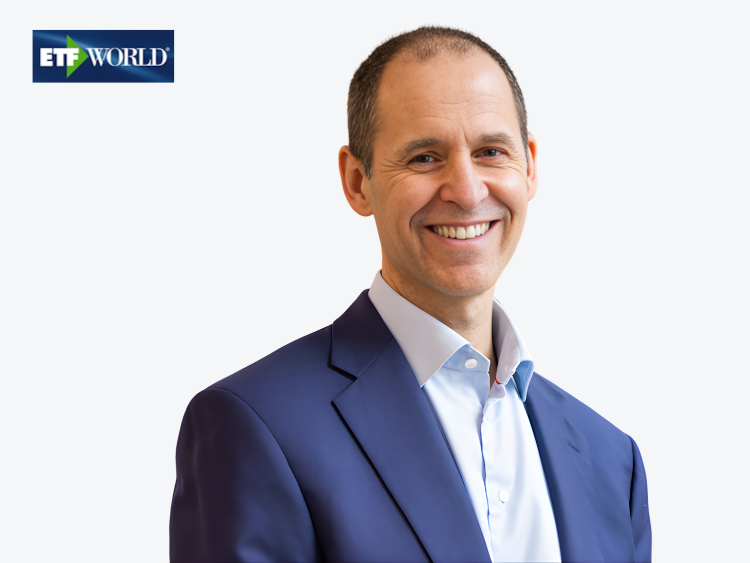
Martijn Rozemuller, CEO at VanEck Europe
VanEck launches Space ETF
– Technological progress makes space travel much cheaper and easier
– The VanEck Space Innovators UCITS ETF provides access to a selection of the world’s largest companies helping to shape the new space age
Asset manager VanEck today lists VanEck Space Innovators UCITS ETF on London Stock Exchange and Deutsche Börse Xetra. With the new ETF, investors can gain access to some of the currently largest and most liquid companies in the global space industry.
“A new space age has begun”, says Martijn Rozemuller, CEO at VanEck Europe. “In recent years, space technologies have made great strides, and the cost of rocket launches and satellites has dropped significantly. As a result, space has become a lot easier and cheaper to reach, opening up entirely new business areas.”
Areas such as reusable rockets and smaller, lower-cost satellites offer new opportunities for companies and investors as costs fall – at a time when demand for satellite-based Internet services is rising and entirely new services such as space tourism are becoming established. Conversely, commercial space sector could develop from the current level of around $350 billion into a trillion dollar industry by 2040.1
“While rockets and satellites used to be developed and launched primarily by governments, a variety of commercial companies are now engaged in building and operating these technologies”, Rozemuller says. “At the same time, space is starting to come back onto the agenda of governments – but they are increasingly relying on the services of private companies in this new commercial space age.”
Investment in five future space topics
With the VanEck Space Innovators UCITS ETF, investors can now gain exposure to a global selection of the largest companies that are helping to shape this new era of space travel, from sectors as diverse as satellite equipment, communications, research and space tourism. With its pure-play approach, the ETF invests only in companies that have the potential to generate at least 50 per cent of their revenue from space-related business.
The ETF has a special focus on five selected future areas of space travel:
– Reusable rockets: They are revolutionising the space industry by lowering the cost of accessing space and launching satellites.
– Low-cost satellites: A new generation of companies producing low-orbit satellites is challenging traditional satellite manufacturers. With the introduction of 5G broadband and the development of the metaverse, these new satellites provide much needed data capacity.
– Space tourism: Future passengers have already made million-dollar deposits. While tickets are very expensive, space tourism is just beginning.
– Climate research: Satellites have become an indispensable part of climate research. They monitor aspects such as the state of the oceans, global temperatures or sea levels.
– Greenhouse gas monitoring: New groups of satellites are helping to monitor and even combat climate change. They can track methane and carbon dioxide emissions from factories, predict the course of forest fires, and detect radio signals in remote regions to uncover illegal logging.
The VanEck Space Innovators UCITS ETF aims to track as closely as possible the performance of the MVIS® Global Space Industry ESG Index. The ETF has a total expense ratio of 0.55 per cent p.a. and is physically replicating. With its own ESG filter, the ETF specifically excludes severely controversial companies as well as manufacturers of controversial weapons, including biological and chemical weapons, cluster munitions and anti-personnel mines.
The prices of securities in the fund are subject to the risks inherent in investing in the securities market, including general economic conditions and sudden and unpredictable price drops. An investment in the fund may result in losses.
Industry or sector concentration risk: The assets of the fund may be concentrated in one or more particular sectors or industries. The fund may be subject to the risk that economic, political or other conditions adversely affecting the relevant sectors or industries may adversely affect the performance of the fund to a greater extent than if the fund’s assets were invested in a wider variety of sectors or industries.
| ETF | VanEck Space Innovators UCITS ETF |
| ISIN | IE00045H0ZN9 |
| Index name | MVIS® Global Space Industry ESG Index |
| Ticker LSE GBP/ LSE USD | JEGB / JEDI |
| Capital management company | VanEck Asset Management B.V. |
| Domicile of the capital management company | Ireland |
| Product structure | Physical (fully replicating) |
| Launch date | 29 June 2022 |
| Total expense ratio (TER) | 0.55% p.a. |
| Appropriation of earnings | Reinvestment |
VanEck launches sustainable Future of Food ETF
– The VanEck Sustainable Future of Food UCITS ETF aims at supporting sustainable Food Production and Development.
– With the ETF, investors invest in food companies, among others, that seek to reduce waste and pollution.
– As an Article 9 SFDR product, the ETF is managed in accordance with “green” criteria, including impact measurement
Asset manager VanEck today lists VanEck Sustainable Future of Food UCITS ETF on London Stock Exchange and Deutsche Börse Xetra. With the new ETF, investors can invest in a pooled selection of innovative food companies from around the world and thus contribute to more sustainably produced food.
Feeding the world’s population is a major challenge that requires high levels of investment.
According to the United Nations, the world’s population is forecast to grow by a quarter and consume up to 70 percent more food by 2050. After all, it’s not just the population as a whole that’s growing, especially in emerging markets. The newly emerging middle classes also eat differently; especially more protein, the production of which consumes many resources.
“The production of food, especially meat, harms both the environment and health. This is due to fertilisers, weed killers and other artificial additives in livestock feed, hormones used in raising animals for slaughter, deforestation to make room for farms, air pollution from long transport routes and methane emissions from large farms”, explains Martijn Rozemuller, CEO at VanEck Europe.
“Without profound changes in agriculture and food production, the world will not be able to stop climate change. With all this in mind, consumers around the world are now demanding alternatives.” The demand for cleaner, healthier and sustainable food is increasing.
The VanEck Sustainable Future of Food UCITS ETF closely tracks the performance of the MVIS® Global Future of Food ESG Index. This index adheres to ESG criteria and is set up as a pure-play product. This means that only companies that generate at least 50% (25% for current components) of their revenues in the food sector or with innovative agricultural technologies are included. In addition, companies that produce organic food and those that have high standards relating to food waste, food safety or environmental impact are also included in the index. Investment opportunities are primarily offered by alternative proteins, new types of dairy products and the technologies used to produce these foods. In its individual stock selection, VanEck therefore focuses on the following key areas:
- Food technology
Technology is the key to reducing the environmental impact of agriculture. Meat from plants, for example, consumes less energy, uses less land and water than cattle farming, and significantly reduces emissions of harmful climate gases: Calculations from 2018 by the nongovernmental organisation GRAIN and the Institute for Agriculture and Trade Policy show that the five major corporations JBS, Tyson, Cargill, Dairy Farmers of America and Fonterra together produce more emissions in a year than major oil companies like Exxon, Shell or BP. 20 of the world’s largest meat and dairy companies together are responsible for more greenhouse gas emissions than Germany or France.1
- Precision agriculture:
The land requirements of traditional agriculture are too great to be sustainable in the future. Solutions can be found through automation, sophisticated Big Data analysis of weather and soil conditions, and more efficient farming methods.
- Agricultural sustainability:
Fossil fuels are needed to produce nitrogen fertiliser, while other agricultural chemicals can be carcinogenic. Alternatives include fertilisers produced with green hydrogen and renewable energy – in combination with biological crop protection.
With the new ETF, investors will invest in about 35 stocks that are positioning themselves early for the transformation of the food industry, which is still several decades away. “By its very nature, the transformation of food production also addressing issues to solve the challenges and demands of our global food system.”, explains Dominik Schmaus, Product Manager at VanEck. As a Article 9 SFDR fund, the ETF is managed according to strict “green” criteria, including impact measurement.
| ETF | VanEck Sustainable Future of Food UCITS ETF |
| ISIN | IE000A4XS8I3 |
| Index name | MVIS® Global Future of Food ESG Index |
| Ticker LSE GBP / USD | VEGB / VEGI |
| Management company | VanEck Asset Management B.V. |
| Company domicile | Ireland |
| Product structure | Physically (fully replicating) |
| Launch date | 24 June |
| Total expense ratio (TER) | 0.45% p.a. |
| Appropriation of income | Re-invested income |
Source: ETFWorld
Subscribe to Our Newsletter